Review: Live Streaming Screen Overlay Vector for Stitch
As a designer who spends more time staring at stitch simulations than actual screens, I approach every new digital embroidery file with a specific set of questions. Will this translate from vector lines to thread? Does the aesthetic hold up when scaled down for a cap or blown up for a sweatshirt? Today, I am evaluating the Live Streaming Screen Overlay Vector. While originally marketed as a graphic asset for online gamers, my interest lies in its potential as a unique machine embroidery design for custom apparel and boutique merchandise.
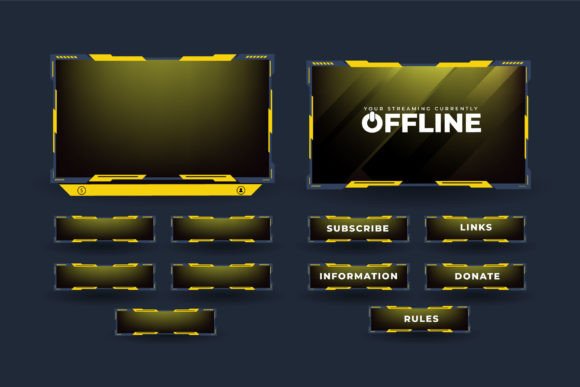
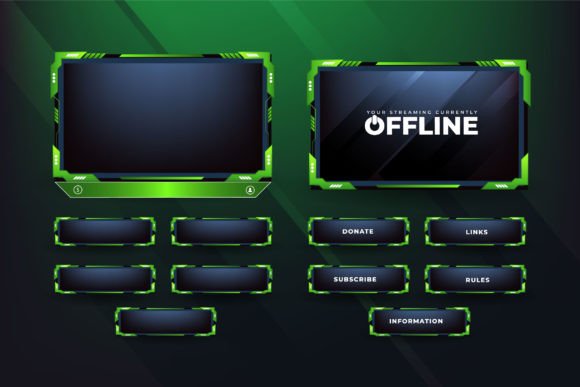
My first impression of this Graphics file is that it carries a distinct, high-energy mood. The description highlights a "futuristic gaming overlay" with green accents and colorful buttons. Visually, this suggests sharp angles, tech-inspired geometry, and a layout that mimics a user interface. For an embroiderer, this immediately triggers thoughts about stitch density and direction. Sharp corners in a digital vector can become puckered messes on fabric if not handled correctly, but they also offer a crisp, modern look that stands out against traditional floral or script designs often found in the Freebies category.
Translating Digital UI to Physical Texture
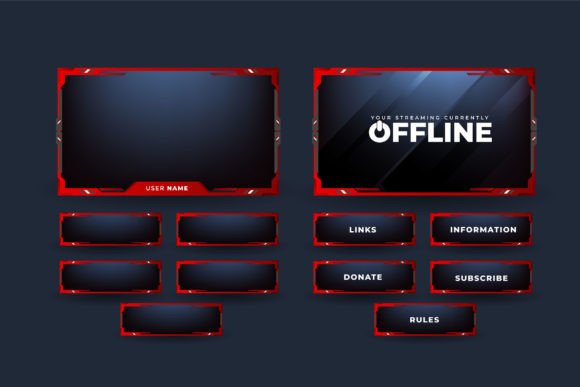
The core challenge—and opportunity—here is taking a screen-based concept and making it tactile. A live stream overlay is designed to be flat and luminous on a monitor. When we move this to a handmade product, we lose the glow but gain texture. I envision this design working exceptionally well as an embroidered patch. The "offline screen section" mentioned in the product details could serve as a perfect background field for a fill stitch, while the "colorful buttons" would pop beautifully using dense satin stitch borders.
Imagine a scenario where a client runs a small esports team or a gaming cafe. They need branded gear that looks professional yet fits the culture. Using this Live Streaming Screen Overlay Vector on a black hoodie creates an immediate association with streaming culture. The green accents, likely neon or lime in thread form, would provide excellent contrast. However, as a reviewer, I must note that the success of this embroidery project depends entirely on how the vector paths are converted into stitches. If the original file relies on thin lines for the "buttons," those might need to be thickened manually in your digitizing software to prevent breakage during washing.
Real-World Application Scenarios
Let's get practical about where this design fits best. I wouldn't recommend this for delicate baby embroidery unless heavily simplified; the futuristic, tech-heavy vibe clashes with the softness usually desired for infant wear. Instead, this shines in the realm of custom apparel for teens and adults. A tote bag design featuring this overlay could appeal to convention-goers or content creators carrying their equipment. The structured nature of the design complements the sturdy canvas of a tote bag perfectly.
For Etsy sellers looking to diversify their design assets, this offers a niche angle. Most shops are saturated with farmhouse styles or minimalist typography. Introducing a gamer-centric sweatshirt embroidery option could capture a specific demographic. Picture a "Just Chatting" or "Offline" status embroidered on the sleeve of a jacket, utilizing the sections of this overlay. It becomes a conversation piece, transforming a standard garment into a piece of internet culture history.
Another strong use case is holiday embroidery for the tech-savvy recipient. A pillow cover featuring this design could serve as a quirky addition to a gaming room setup. The geometric shapes allow for creative play with thread colors; you aren't stuck with just green. Swapping the primary color to match a specific team's branding or a streamer's logo makes this a highly customizable personalized gift.
Technical Considerations and Fabric Choices
Before rushing to hoop this up, we need to discuss the limitations. The "futuristic" style implies straight lines and hard edges. These can be tricky on stretchy fabrics or curved surfaces like caps. If you attempt this on a baseball cap, the curvature might distort the rectangular "screen" sections, making them look warped. In such cases, a sturdy stabilizer is non-negotiable. You might even need a cut-away stabilizer rather than tear-away to maintain the structural integrity of those sharp corners over time.
Furthermore, consider the hoop size. Gaming overlays are often wide and panoramic. If you are working with a standard 4x4 hoop, you may need to split the design or focus only on specific elements, like the "colorful buttons." Attempting to cram the entire wide layout into a small space will result in lost detail. The tiny elements that look crisp on a 4K monitor might vanish into a blob of thread when stitched at 2 inches wide. Always test the design on scrap fabric first, ideally in the same weight as your final material.
Texture is another factor. This design relies on clean lines. If you choose a highly textured fabric like a bouclé knit or a heavy tweed, the precision of the running stitch outlines might get lost. Smooth cottons, poly-blends, or tight-weave canvases are your safest bets for preserving the "digital" look of the original vector.
Commercial Viability and Brand Consistency
For those running a craft business, the value of this design lies in its specificity. It speaks directly to a subculture. Using this in your printable mockup portfolios can attract clients who feel underserved by generic design offerings. However, because this is listed under Freebies, you must exercise extreme caution regarding licensing. Just because a file is free to download does not automatically grant commercial rights for physical goods.
Before selling any finished product or listing this as a digitized embroidery file in your shop, verify the license terms. Some creators allow personal use only, while others permit commercial application with attribution. Ignoring this can lead to copyright strikes that damage your reputation as a reliable small shop product provider. If the license allows it, this design can be a powerful tool for building brand consistency for gaming influencers who want physical merch that matches their digital overlay.
Final Verdict for the Maker
The Live Streaming Screen Overlay Vector is a fascinating bridge between digital interface design and physical textile art. It challenges the embroiderer to think about how screen aesthetics translate to thread. While it requires careful attention to stitch density, stabilizer choice, and fabric selection, the payoff is a modern, eye-catching commercial embroidery element that stands out in a crowded market.
My advice is to start small. Digitize just one section of the overlay—perhaps the button cluster—and test it on a dark t-shirt. Evaluate how the thread colors interact with the fabric and whether the sharp edges hold up after a wash cycle. If the test is successful, you have a unique asset for creating custom apparel that resonates with the digital generation. Remember, the goal isn't just to replicate the screen, but to elevate it through the craftsmanship of embroidery. With the right execution, this vector can transform from a simple graphic into a standout feature on any handmade product.